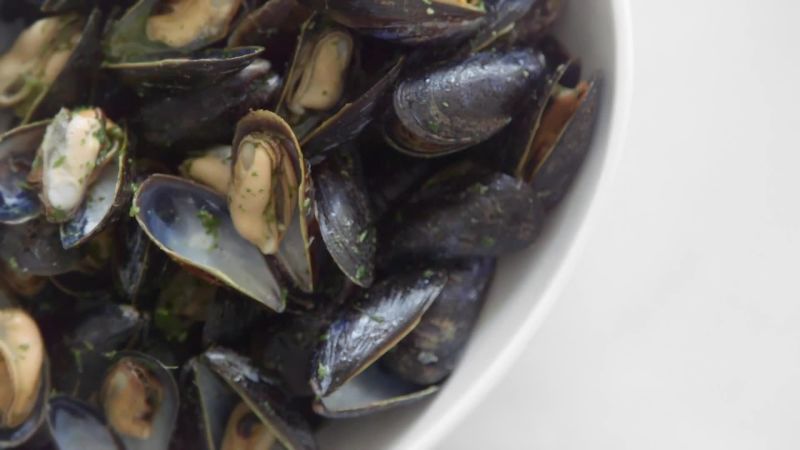
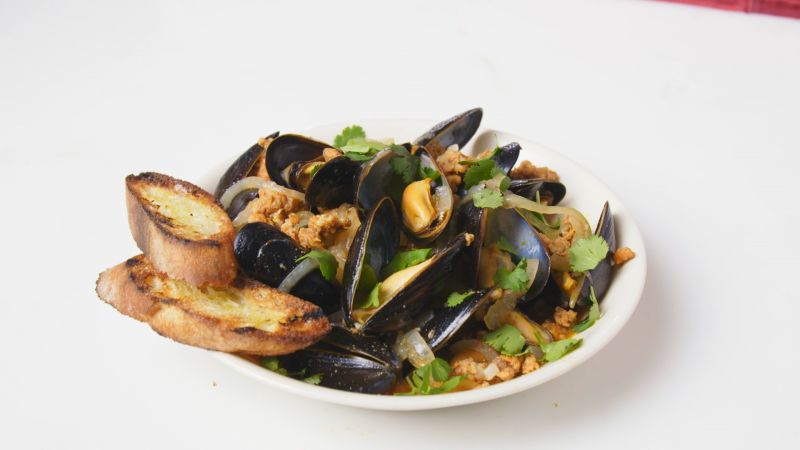
Pulling mussels from the shell is a delightfully hands-on way to get your lean protein. The little black shellfish are easy to cook; the only trick is to sort them carefully beforehand. Toss out any cracked shelled mussels, as well as any open ones that don’t close up tight when you squeeze them. The beards are the tough little fibers that help mussels cling to rocks; to remove them, just pinch the hairy fibers with a clean kitchen towel and pull. Don’t do this much before cooking, though, becau.…
In this date-night meal, mussels and clams get tangled up in strands of nutty buckwheat noodles soaking in a briny, garlicky, and ever-so-slightly-spicy broth.
This is my favorite way to eat mussels. It is how we cook them in Trieste and the surrounding area. Prepare this only when the mussels are super-fresh, and you will taste the sea in your mouth, made all velvety by the bread crumbs. I love dunking the crusty bread in the sauce. If there are any leftovers, remove the mussels from the shells and return them to the sauce; tomorrow you’ll have a great pasta-with-mussels dish.
Here is a dish much beloved by my husband and children. Medium-sized clams may be substituted for the mussels. You may serve this as a first course, as the main course, or as a light lunch with a salad. Indians eat this curry with rice, but you may serve the mussels by themselves in individual bowls.
Steamed mussels make a lovely dish to eat alone slowly, plucking the plump flesh from the shells as messily as you like and sopping up the heavenly liquor with chunks of French bread.
I’d had mussels in New York, even as a child, but never did they look so appealing as they did my first night in Rome, laced with onion, garlic, tomato, parsley, and lemon. Since then I’ve learned to love and prepare mussels in a variety of ways, but I always come back to these. Serve with lots of bread for sopping up the broth.
Steaming a pot of shellfish is actually quite simple—and quick. It requires just a small amount of aromatic liquid, such as the wine used in the recipe below, which imparts flavor to the shellfish while also mixing with the flavorful liquid released from the shellfish, resulting in a delicious broth. And the shells serve as a “steamer basket,” keeping the shellfish from being submerged in the liquid. A dry white wine is used as the steaming liquid; other good choices would be beer or water (you could even forgo adding liquid and steam the mussels in a covered pot until they open, as they have enough liquid in their shells, then sprinkle with salt and pepper). Here some aromatics are sautéed before the liquid is added to enhance its flavor before adding the mussels. In Belgium and France, mussels are traditionally accompanied by piping hot French Fries (page 333), but a crusty loaf of bread is always welcome.
This is one of those almost miracle dishes: it is ready in 10 minutes, it is quite inexpensive, it is full of flavor and texture and very gratifying, and all of my grandchildren love it. The brininess of the sea will come forth with the underlying garlic, lemon, and olive oil, the flavors all tied together by bread crumbs, then captured in the opening shells of this sweet mollusk. But one thing is required of you in order for this miracle to happen. The mussels you buy must be absolutely the freshest; otherwise, turn the page and go to another recipe. To enjoy this dish best, you must serve it piping hot in hot bowls, because the shells cool quickly. Grilled country bread and spoons will help scoop up every last drop. If you have some left over, remove mussel meat from the shells and return it to the sauce to make a great condiment for a plate of pasta the next day.
We gave you a sneak peek at three photos taken of recipes from Heart of the Artichoke. You voted for your favorite, and now we're ready to reveal the winning recipe: Mussels Mariniere.
We gave you a sneak peek at three photos taken of recipes from Elizabeth David's cookbook, At Elizabeth David's Table. You voted for your favorite, this light, vibrant mussel soup.
Today on It's Alive, our very own Brad Leone returns to bust out his patented fermentation moves on our bivalve buddy the mussel, pickling them alongside some leeks and shallots. Perfect for topping a cracker, mixing into pasta, or serving with rice, these pickled mussels pack lots of flavor into a petite package.
No need to prep everything ahead: Get your chopping in while the fennel cooks. Just keep an eye on the pot!
Recipe: http://slim-weight.today/recipe/clams-in-white-bean-sauce%3C/div%3E%3C/div%3E%3C/div%3E%3C/div%3E%3C/div%3E%3C/div%3E%3C/div%3E%3Cdiv class="StackedRatingsCardWrapper-RIFgn jsPKbl SummaryCollectionGridSummaryItem-ilztYA cpHIzM search_result_item-5b996e3760d00151f019a31b">
Cody Auger, chef/owner of Nimblefish in Portland, Oregon, breaks down 11 whole fish and turns them each into a single piece of nigiri. Watch as he scales, fillets and prepares Red Sea Bream (Tai), Threeline Grunt (Isaki), Golden Eye Snapper (Kinmedai), Young Gizzard Shad (Shinko), Sardine (Iwashi), Horse Mackeral (Aji), Trevally Jack (Shima Aji), Yellow Striped Butterfish (Takabe), Beltfish (Tachiuo), Bigfin Reef Squid (Aori Ika) and Bigeye Tuna (Maguro).